Begin with the object, not the empty shelf
Loose things often need boundaries, but boundaries can be simple. A shallow tray may serve keys better than a decorative box. A handled bin may gather cleaning cloths without introducing a lid. Before browsing, name the category, who uses it and how often it leaves its place. This turns an appealing container into a specific decision about everyday work.
Next, try the category in a box you already own. Notice whether someone has to carry it, reach into it or empty it to find the last item. Those movements tell you more than nominal capacity. A large box that becomes too heavy is not more useful merely because it holds more. Divide dense items into smaller loads that your household can comfortably handle.
Our task-based shortlist
For frequently used, durable belongings, an open handled bin is our starting choice. Its advantage is direct access: no latch, no detached lid and no need to remember a precise arrangement. Its weakness is exposure. Dust can collect, small pieces can escape through cutout handles, and an overfilled bin soon becomes difficult to search. Keep its contents related and its fill level low enough to see into.
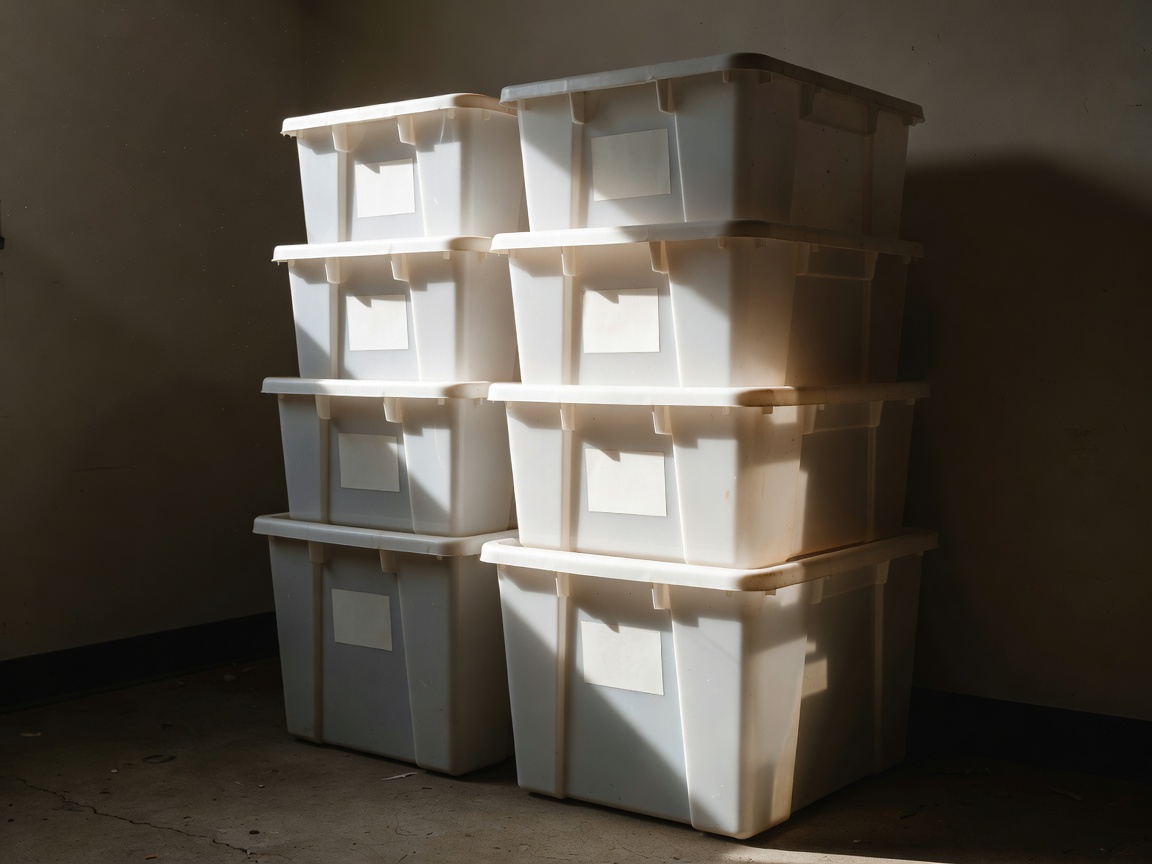
For occasional-use items, a clear lidded box is a stronger candidate. It protects against ordinary household dust and lets you recognize the category without opening every box. It is not automatically waterproof, pest-proof or suitable for an attic. Check the specific product documentation. Place lighter boxes higher and avoid building a stack that must be dismantled whenever a frequently needed item is retrieved.
A woven basket works well when softness and visual quiet matter, such as holding spare throws. It is less useful for tiny parts, damp items or anything needing a wipe-clean interior. A rigid drawer insert, meanwhile, can divide an existing drawer without adding another furniture piece. The best first purchase may be one divider rather than a whole set of containers.
| Type | Best fit | Access cost | Check before buying |
|---|---|---|---|
| Open handled bin | Daily loose items | Usually one pull | Grip clearance; loaded weight |
| Clear lidded box | Occasional supplies | Unstack and open | Lid fit; usable internal size |
| Soft basket | Light textiles | Direct reach | Snagging; cleaning method |
| Drawer insert | Small repeated categories | Open one drawer | Drawer height; lost space at edges |
| Adjustable shelf | Mixed-size categories | Direct reach if not double-stacked | Load limits; stability; anchoring |
Measure usable space, not just the outside
Manufacturers may list external dimensions that include projecting handles, tapered walls or a lid rim. Measure the shelf opening and compare it with the full outside size. Then check whether the inside will accept the actual objects. Leave room for your fingers and for the container to tilt if necessary. If a cupboard hinge narrows the opening, measure at that obstruction rather than only across the back wall.
Retail ranges such as IKEA SAMLA, Really Useful Boxes and Sterilite illustrate how widely lids, handle shapes and proportions can vary. These are examples to investigate, not tested winners or endorsements. Specifications and availability differ by model and market. Read the current listing, inspect the closure where possible and buy one trial unit before committing a whole cupboard to the same footprint.
Shelving should support access safely
Adjustable shelving is often more space-efficient than a fixed unit because gaps can follow the stored objects. Keep heavy items low and everyday items within a comfortable reach for their users. Do not assume that a shelf rating is the same as the total unit rating. Spread loads as the manufacturer directs and check whether the stated capacity depends on installation or anchoring.
Furniture tip-over is a real household hazard. Follow the supplied anchoring instructions and use hardware appropriate to the wall construction; seek qualified help if that is uncertain. The U.S. Consumer Product Safety Commission’s Anchor It! campaign provides a useful introduction to furniture tip-over prevention. Do not use a storage unit as a ladder, and avoid placing appealing toys high enough to encourage climbing.
Leave a little capacity unused
A shelf packed to its limit is difficult to maintain. Leave enough room to return an object without compressing everything around it. This is not wasted space; it is working space. If the category still overflows, revisit what belongs there before adding a second row. A simpler category boundary may do more for the household than another container.
For the next step, use the reach test to see whether the new arrangement actually removes effort. Keep it only if retrieving and returning are easier.